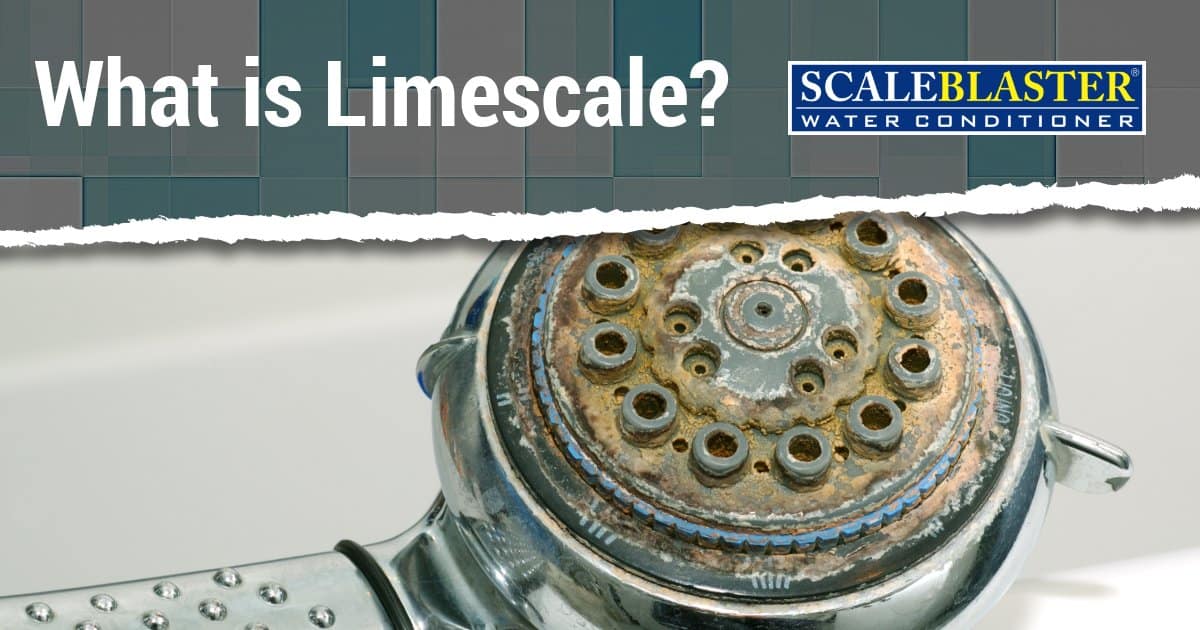
If you have hard water, you have probably seen limescale. It often looks like an off-white, chalky crust on faucets, showerheads, sinks, toilets, coffee makers, dishwashers, water heaters, and other surfaces that come into contact with water.
What is limescale? Limescale is a mineral deposit that forms when hard water leaves calcium carbonate and related mineral solids behind. As water heats, evaporates, or sits on a surface, these minerals can collect and harden.
Hard water is common in many homes and businesses. The issue is not just how limescale looks. Over time, buildup can affect water flow, appliance performance, cleaning needs, and the service life of water-dependent equipment.
Where Limescale Comes From
What is limescale made of? In most cases, it is mainly calcium carbonate. Magnesium minerals can also be part of the buildup. These minerals are naturally found in hard water.
When hard water moves through plumbing, fixtures, heaters, and appliances, minerals can attach to surfaces. Heat can speed up this process, which is why water heaters, boilers, kettles, dishwashers, and hot water lines often show limescale problems first.
Common Signs of Limescale
Many people first notice limescale as white spots or crusty buildup. In a home, it can collect around faucets, shower doors, sinks, tubs, toilets, and appliances. In commercial and industrial systems, it can build up inside piping, pumps, boilers, cooling towers, and other equipment.
Limescale may also show up as reduced water pressure, clogged aerators, more frequent fixture cleaning, slower appliance performance, or higher maintenance needs. A limescale problem can start small, but it can become harder to manage when buildup is left untreated.
Is Limescale Bad for You?
Many of our customers ask if limescale is really bad for you. Limescale itself is made from minerals commonly found in hard water. The larger concern is usually what it does to plumbing, fixtures, appliances, and water-based equipment over time.
Why Limescale Can Be a Problem
What is limescale doing inside your plumbing? It’s narrowing pipe openings, restricting water flow, and making equipment work harder. In water heaters and heat exchange equipment, scale also reduces efficient heat transfer.
For homeowners, this can mean more cleaning, more wear on appliances, and less reliable water flow. For commercial or industrial facilities, scale may contribute to downtime, repair costs, equipment strain, and higher operating demands. That’s why a quality limescaler is so important.
How ScaleBlaster Helps Manage Limescale
ScaleBlaster is an electronic water descaler and water conditioner. The system uses a control unit and a signal cable that wraps around the outside of the incoming water line. No salt, chemicals, filters, or ongoing maintenance are required.
The ScaleBlaster signal helps influence how calcium and magnesium carbonate minerals crystallize in the water. This helps reduce their ability to stick to pipes, fixtures, appliances, and equipment. Over time, existing buildup may gradually soften, break down, and be flushed away through normal water flow.
ScaleBlaster is not a water filter, purifier, or reverse osmosis system. It does not remove calcium or magnesium from the water. Instead, it is designed to help manage how those minerals behave so they are less likely to form hard scale on surfaces.
If you are comparing a limescaler, chemical cleaner, water softener, and electronic descaler, it is important to understand this difference. ScaleBlaster does not create traditionally softened water. It is a salt-free approach to hard water scale management.
A Salt-Free Way to Reduce Scale Problems
What is limescale prevention with ScaleBlaster? It is a long-term method for helping stop new scale from forming while helping existing mineral buildup reduce over time. This makes it useful for homes, commercial properties, and industrial facilities that need a simple way to manage hard water scale.
Homeowners can use ScaleBlaster to help protect water heaters, dishwashers, washing machines, faucets, and shower heads. Learn more about a home water conditioning system for residential scale control.
Facility teams can also use ScaleBlaster to help protect piping infrastructure, HVAC equipment, hot water systems, boilers, chillers, cooling towers, and other water-dependent equipment. Explore commercial water conditioning systems for higher-demand applications.
Choosing the Right Limescale Solution
Chemical cleaners can help clean visible deposits on surfaces, but they don’t address the incoming hard water that keeps creating buildup. A salt-based water softener removes calcium and magnesium through ion exchange, but it requires salt and ongoing maintenance.
ScaleBlaster offers a different path. It is a water descaler that helps prevent new limescale from forming without salt or chemicals. For many users, that makes it a practical, low-maintenance option for managing scale at the source.
Frequently Asked Questions
What is limescale in water systems?
Limescale is a hard mineral deposit that forms when calcium carbonate and related hard water minerals collect on surfaces. It often appears on fixtures, appliances, pipes, water heaters, and other equipment.
Is limescale bad for you if it comes from hard water?
Limescale is mainly a plumbing, appliance, and equipment concern. ScaleBlaster does not filter or purify drinking water. It helps manage hard water minerals so they are less likely to form scale inside water systems.
Is ScaleBlaster a limescaler or a water softener?
ScaleBlaster is an electronic water descaler and water conditioner, not a traditional salt-based water softener. It does not remove calcium or magnesium. It helps prevent new limescale and supports gradual reduction of existing buildup over time.
Ready to reduce hard water scale without salt, chemicals, filters, or ongoing maintenance? Contact Us to find the right ScaleBlaster model for your home, business, or facility.

Founder and Co-Owner of Clearwater Enviro Technologies
Jeff Conway is the founder and co-owner of Clearwater Enviro Technologies, which opened in 1989 from the city it started from – Clearwater, Florida. The first product line was the Clearwater Pool Systems with Apollo 11 astronaut Buzz Aldrin as it’s company spokesman. In 1995, the electronic water conditioner ScaleBlaster was added to the product line. Jeff was born in Auburn, Indiana but grew up in Fairfield, Connecticut. He is a graduate of Florida Southern College in 1978 and has resided in the Tampa Bay area ever since. Several products have evolved over the years, making the company the largest manufacturer of mineral ionization equipment and electronic water conditioners in the world.